
The violin bridge is a delicate, unfixed piece of precision-carved maple wood that stands vertically on the top belly of the instrument. It is held in place purely by the downward tension of the strings rather than being glued down. Its primary acoustic function is to act as a transducer, transferring the physical kinetic vibrations of the strings directly into the violin’s soundboard and sound post, which amplifies the sound. Mechanically, it lifts the strings to a precise height and separates them across an arced curve, allowing the player to bow individual strings without accidentally hitting adjacent ones. Because every violin has a uniquely shaped top plate, a raw bridge blank must be custom-fitted, carved, and planed by a professional luthier to match the exact contours and acoustic properties of the individual instrument.
Key Specifications
• Material: Aged, quarter-sawn maple wood, often chosen for its dense medullary rays to optimize sound transmission.
• Placement: Positioned exactly between the inner notches of the f-holes, centered over the bass bar and sound post.
• Alignment: Set at a strict 90-degree angle relative to the violin’s top plate on its back (tailpiece-facing) side.
• Thickness Profile: Tapered design, measuring approximately 4.5 mm thick at the feet and narrowing down to roughly 1.2 mm to 1.5 mm at the top ridge.
• Contour: An asymmetrical arch where the bass side (under the G string) is carved slightly higher than the treble side (under the E string) to accommodate the wider vibration amplitude of lower strings.
• Feet Fitting: Two independent feet perfectly hollowed and contoured to flush-mount against the curved body of the violin without any gaps.
Sale!






Violin Bridge
Original price was: KSh 1,000.00.KSh 800.00Current price is: KSh 800.00.
🔒 Safe & Secure Checkout
Related products
-
Sale!
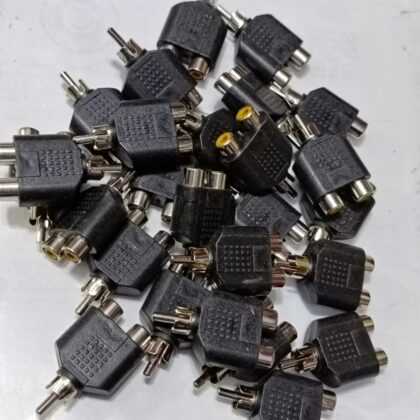
RCA Male to Dual RCA Female Audio/Video Splitter Adapter
Original price was: KSh 350.00.KSh 250.00Current price is: KSh 250.00. -
Sale!
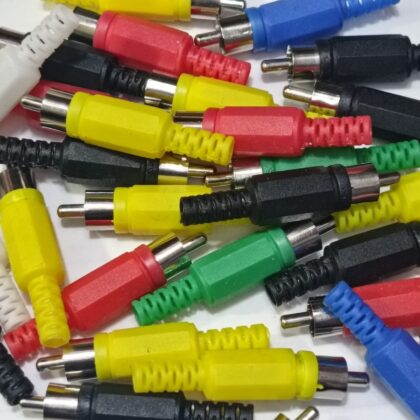
Assorted Male RCA Connectors
Original price was: KSh 400.00.KSh 300.00Current price is: KSh 300.00. -
Sale!
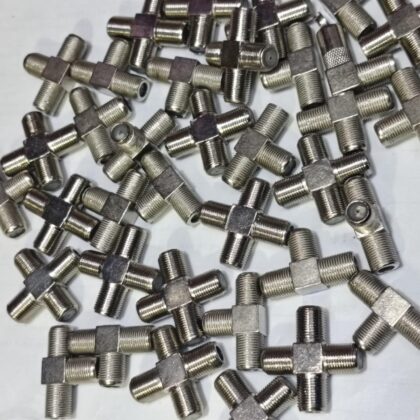
4-Way F-Type Female Coaxial Cable Cross Adapter (Joiner/Splitter)
Original price was: KSh 700.00.KSh 450.00Current price is: KSh 450.00.
Reviews
There are no reviews yet.